




Not Every Cyber Threat Comes From the Outside
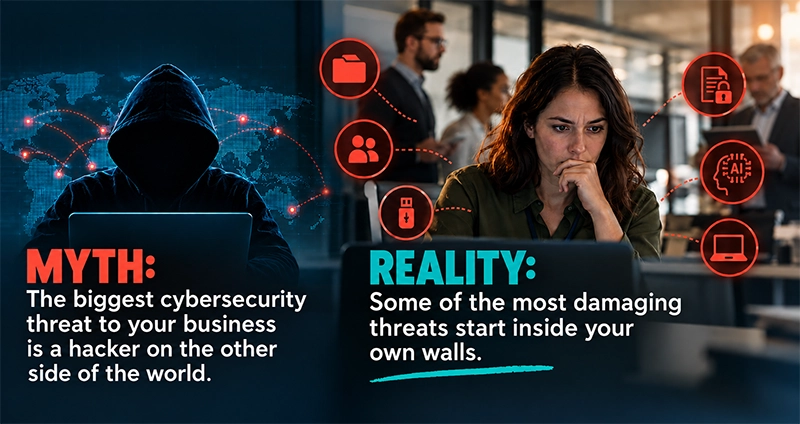
Myth: The biggest cybersecurity threat to your business is a hacker on the other side of the world.
Reality: Some of the most damaging threats start inside your own walls.
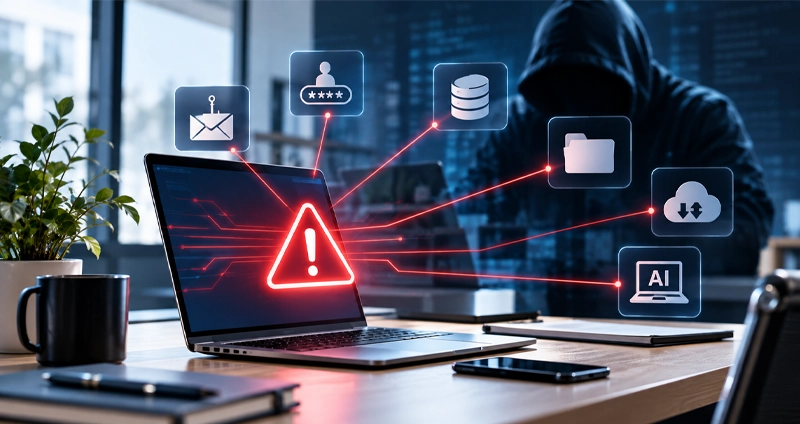
When most businesses think about cybersecurity, they picture an attacker trying to break through their defenses from the outside. That threat is real. But employees, vendors, partners and even executives can put your business at risk too, through bad intent or a simple mistake.
Knowing what insider threats look like, spotting the warning signs and having a plan to respond is the difference between a close call and a costly breach.
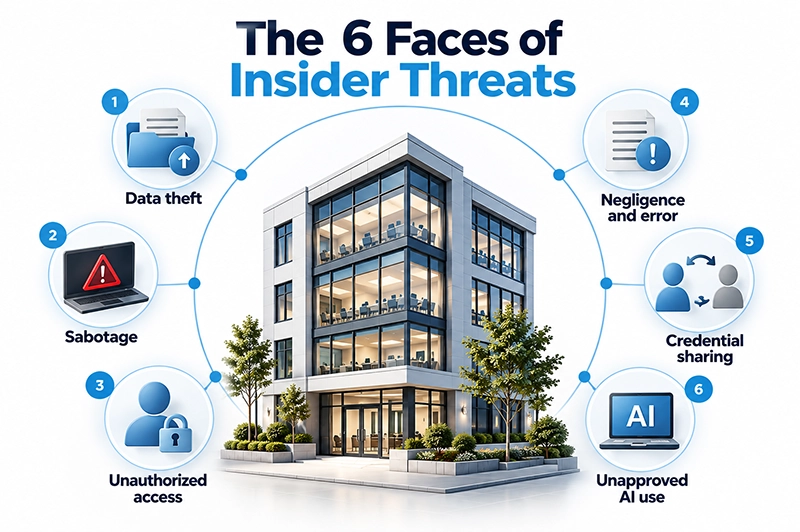
Insider threats come in several forms. Each can do serious damage.
- Data theft. Someone inside your organization downloads or leaks sensitive information for personal gain or to cause harm. Walking off with a company laptop or copying confidential files to a personal drive both count.
- Sabotage. A disgruntled employee, activist or someone working for a competitor deliberately damages your business by deleting files, infecting devices or locking you out of critical systems.
- Unauthorized access. Someone views or obtains information they have no business seeing. Sometimes it is intentional. Sometimes an employee simply does not realize the access is off limits.
- Negligence and error. Not every insider threat is malicious. Mishandled data, skipped security steps and avoidable mistakes can expose your business just as effectively as an attacker.
- Credential sharing. Sharing a password is like handing your house keys to an acquaintance. You cannot control what happens next. Shared logins open the door to unauthorized access and attacks.
- Unapproved AI use. Employees paste company or customer data into AI tools your business has never reviewed. Once that data leaves, you cannot pull it back.
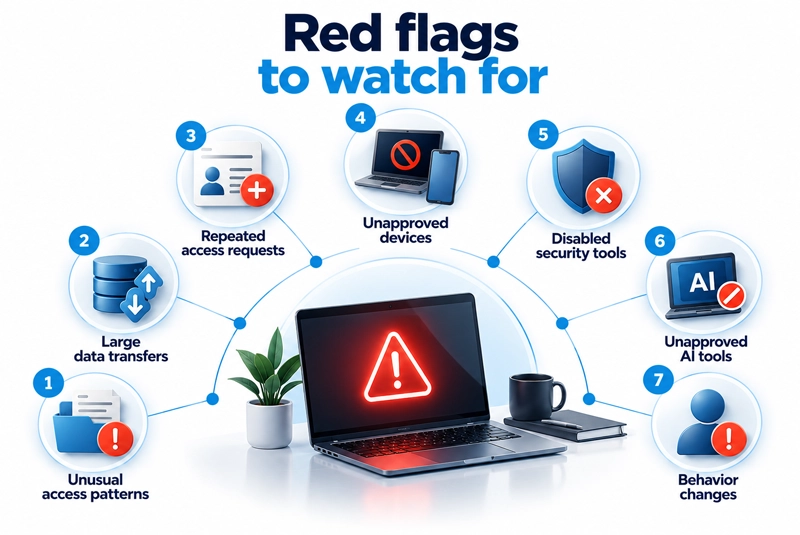
The earlier you spot an insider threat, the better. Train your team to notice these signs:
- Unusual access patterns: An employee starts opening confidential files unrelated to their role.
- Large data transfers: Someone downloads large volumes of customer data or moves it to external storage.
- Repeated access requests: A person keeps asking for access to critical systems their job does not require.
- Unapproved devices: Employees open confidential data on personal laptops or other unmanaged devices.
- Disabled security tools: Someone turns off antivirus, firewall protections or other controls.
- Unapproved AI tools: Employees share sensitive data with public AI platforms your business has not vetted.
- Behavior changes: An employee starts missing deadlines, acting secretive or showing signs of extreme stress.
No single sign proves wrongdoing. Patterns matter. The sooner you see them, the better positioned you are to act.
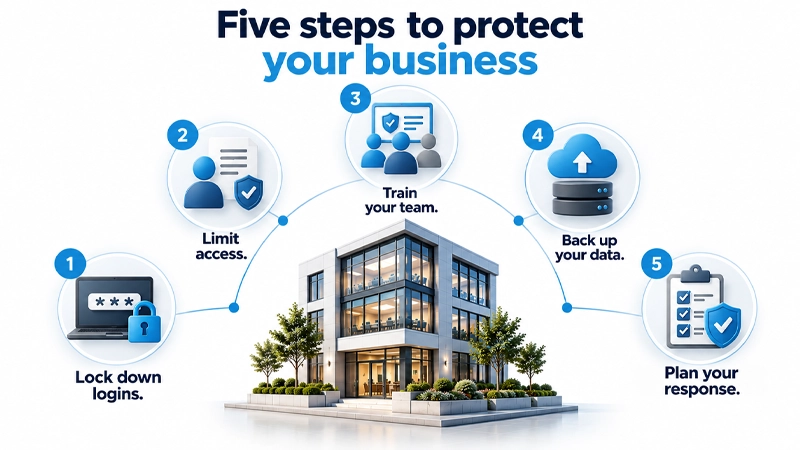
Build your defenses from the inside out
- Lock down logins. Set a strong password policy and turn on multi-factor authentication (MFA) wherever possible.
- Limit access. Give employees access only to the data and systems their role requires. Review permissions regularly.
- Train your team. Cover insider threats, security best practices and safe use of AI tools.
- Back up your data. Regular, tested backups let you recover when data is lost or destroyed.
- Plan your response. Build an incident response plan for insider threats, with clear rules for AI use and handling sensitive data.
You don’t have to do this alone
Protecting your business from the inside can feel overwhelming when you are doing it alone. TekConcierge helps businesses put the right security frameworks, monitoring tools and response plans in place. Whether you are starting from scratch or strengthening what you have, we can help.
Ready to take the next step? Schedule a 10-minute discovery call. We will show you how to monitor for insider threats and respond fast if something happens.